
James Lansberry
Executive Director
James Lansberry brings 21 years of healthcare sharing ministry experience, having served as Executive Vice-President for Samaritan Ministries International. He is an expert on healthcare economics, general bioethics issues, and healthcare public policy, with an Executive MBA from Bradley University. James also serves as a Life and Career Coach and provides substantial expertise in healthcare sharing ministry operations and organizational standards evaluation.

Mary Mayhew
Board Chair
Mary Mayhew serves with the Florida Hospital Association and previously served as Secretary of the Florida Agency for Health Care Administration under Governor Ron DeSantis, playing an instrumental role in the state’s COVID-19 response. She also served as Deputy Administrator and Director of the Center for Medicaid and CHIP Services at the U.S. Department of Health and Human Services, overseeing the $375+ billion Medicaid program. Her experience includes six years as commissioner of the Maine Department of Health and Human Services. She holds a bachelor’s degree in political science from the University of Arkansas.
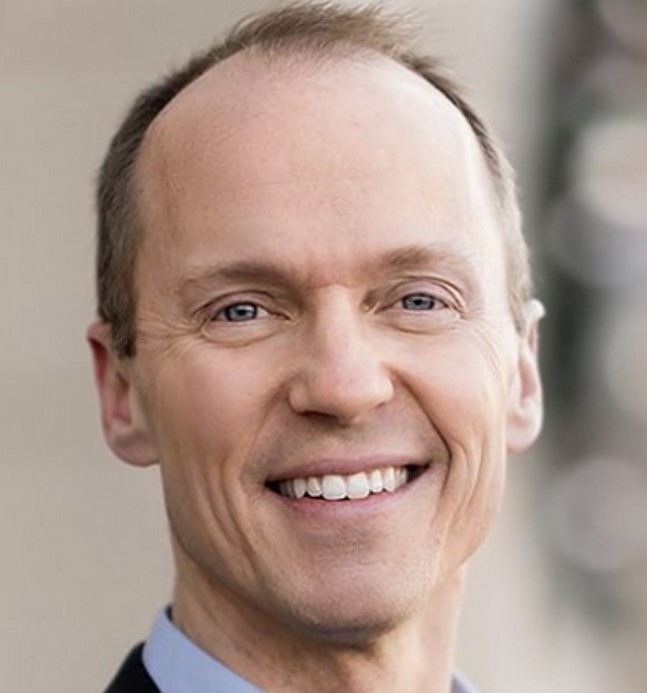
Josh Heidelman
Board Co-Chair and Secretary
Josh Heidelman is a partner at Castañeda + Heidelman LLP with extensive nonprofit governance experience. He served seven years as Executive Vice-President, General Counsel, and Corporate Secretary for Wycliffe Bible Translators and as board member and chair of the governance committee of the Christian Leadership Alliance. His private practice encompasses complex commercial litigation, including cross-border contract disputes, intellectual property, and employment matters. He is an AV Preeminent rated lawyer through Martindale-Hubbell.
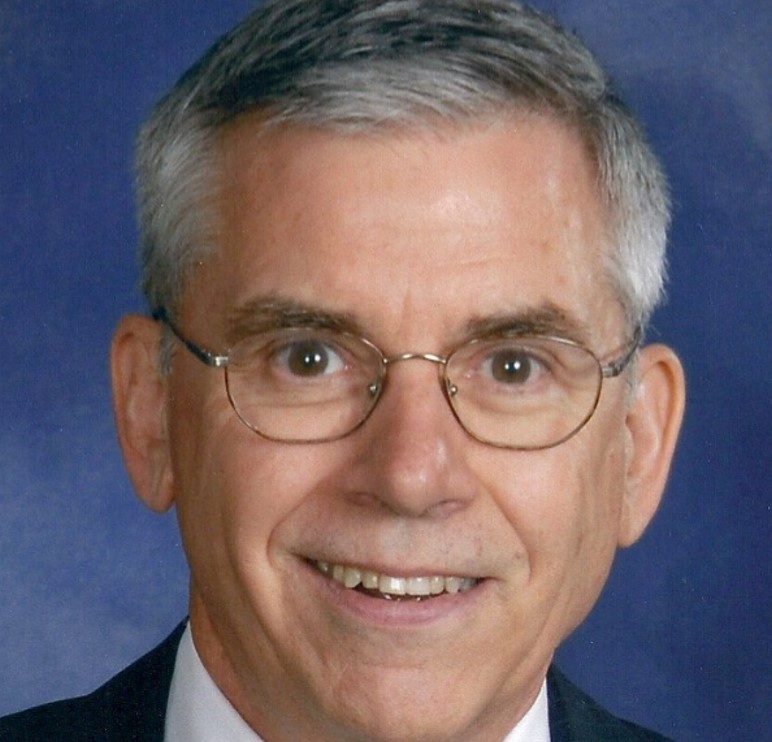
David Cram
Board Treasurer
Dave Cram operates an income tax practice and provides financial procedure reviews for churches and ministries. He retired after 34 years as a missionary with Wycliffe Bible Translators, serving 11 years as Corporate Treasurer and Chief Audit Executive of SIL International. His experience includes 8+ years as Vice President for Finance and CFO, field representation for the Evangelical Council for Financial Accountability, and compliance reviews in over 150 Christian ministries. He holds degrees in Mathematics and Finance (University of Washington) and is a licensed CPA.
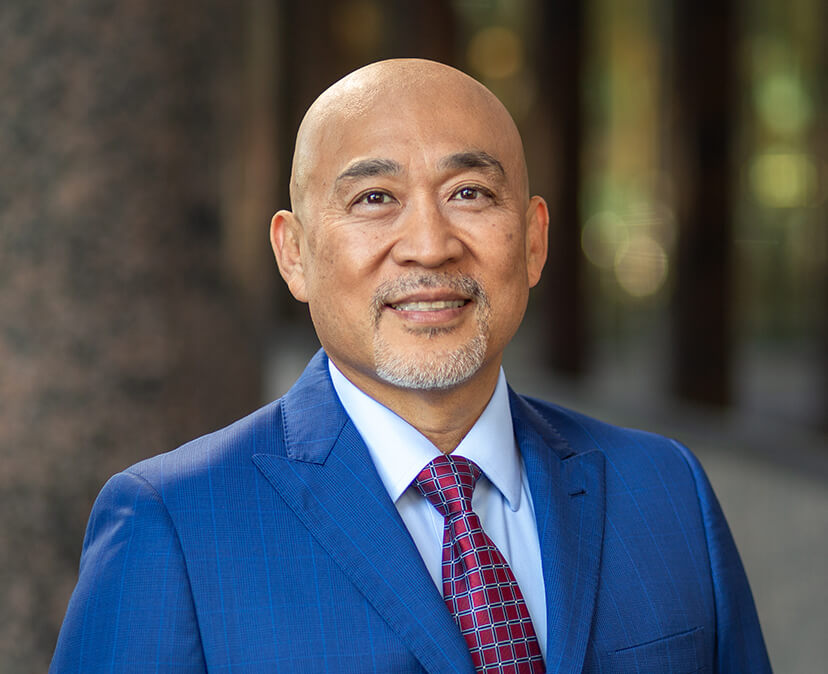
Chu Soh
Board Member
Chu Soh is an independent management consultant and former Chief Operating Officer of GuideStone Financial Resources. Before GuideStone, he served as COO of Christian Care Ministry’s Medi-Share program after a 21-year career in the United States Air Force. His executive experience spans healthcare, managed care, risk management, fin-tech, and insurance-tech. He holds degrees from the Air Force Academy (BS Biology), University of Florida (MS Sports Medicine), and Baylor College of Medicine (Doctorate in Physical Therapy).

The Healthcare Sharing Accreditation Board (HCSAB) is an independent organization dedicated to establishing and maintaining standards for healthcare sharing ministries.
HCSAB operates independently from healthcare sharing ministries, regulatory agencies, and other industry stakeholders. Our governance structure ensures objective decision-making and prevents conflicts of interest in the accreditation process.
Governance Principles:

Healthcare sharing ministries provide a valuable mechanism for individuals to band together to meet medical needs based on shared beliefs and values. However, the healthcare sharing sector has lacked standardized oversight and transparency measures.
HCSAB was created to address this gap. Having an independent, thorough assessment process for healthcare sharing ministries allows potential members and other stakeholders to make better-informed decisions. Through our accreditation standards, we enable healthy organizations to pursue continuous improvement in operations and transparency.
Healthcare sharing is a viable mechanism for patients to band together to meet medical needs based on shared religious or ethical beliefs
Transparency distinguishes healthcare sharing from traditional insurance – Healthcare sharing ministries should clearly communicate what differentiates their model from health insurance coverage
Accreditation drives continuous improvement – Independent assessment allows healthcare sharing ministries to demonstrate their commitment to operational excellence and transparency while striving for ongoing enhancem
Self-managed consumer protections create healthier growth in the healthcare sharing sector. By establishing voluntary standards and independent verification processes, HCSAB helps ensure that ministries operate with integrity while preserving the diverse approaches that characterize the healthcare sharing community.
HCSAB develops and maintains standards through a collaborative process involving healthcare sharing ministry stakeholders, regulatory and legal experts, and other industry professionals. Standards are reviewed periodically and updated based on industry evolution, regulatory changes, and stakeholder feedback.
HCSAB maintains strict conflict of interest policies to ensure objective evaluation including financial independence from accredited ministries, board member conflict disclosure requirements, evaluation process transparency, appeals procedures for disputed decisions, and public reporting of accreditation actions.
The Healthcare Sharing Accreditation Board (HCSAB) is an independent, non-governmental organization that establishes and enforces standards for healthcare sharing ministries. Through accreditation, HCSAB provides trusted, third-party validation that a ministry operates with integrity, financial responsibility, and sound governance practices
HCSAB is established as a 501(c)(3) ministry with no direct ties to any health care sharing ministry (HCSM) nor the trade organizations that have HCSMs as members. Our board has been assembled to have a variety of expertise and experience, and no board member has any current financial or familial interest in any HCSM.
Health care sharing is a nonprofit, faith- or ethics-based approach to meeting medical financial needs. Members voluntarily contribute funds to help pay one another’s healthcare expenses, guided by shared religious or ethical beliefs. Unlike insurance, health care sharing makes no legal promise to pay, but rather relies on community, trust, and mutual support.
Accreditation means that a ministry has undergone a rigorous review by HCSAB and has demonstrated compliance with established standards of governance, financial accountability, transparency, and member protections. It is a public signal that a ministry is committed to serving its members responsibly.
Accreditation matters because it builds trust. For members, it offers peace of mind that their ministry is transparent and well-managed. For providers, it assures credibility. For regulators and legislators, it demonstrates responsible self-regulation within the healthcare sharing community.
No. Accreditation is voluntary. However, ministries that pursue accreditation distinguish themselves as organizations committed to the highest standards of integrity and accountability.
While groups such as ECFA provide general nonprofit accountability, HCSAB is uniquely focused on healthcare sharing ministries. Its standards are tailored to the specific legal, financial, and operational issues of healthcare sharing, making accreditation highly relevant to this distinct sector.
You can find the core tenets of healthcare sharing here.